
Business
RBC Hires Gaut From Mizuho to Head Strategic Equity Dealmaking
By Katherine Langford
Advertisement · Why this ad?
Marcus manages the day-to-day editorial workflow across all brands, coordinating coverage assignments and ensuring editorial standards are met. He previously served as city editor at the Pioneer Press and holds a degree in Political Science from Carleton College.
More from Marcus →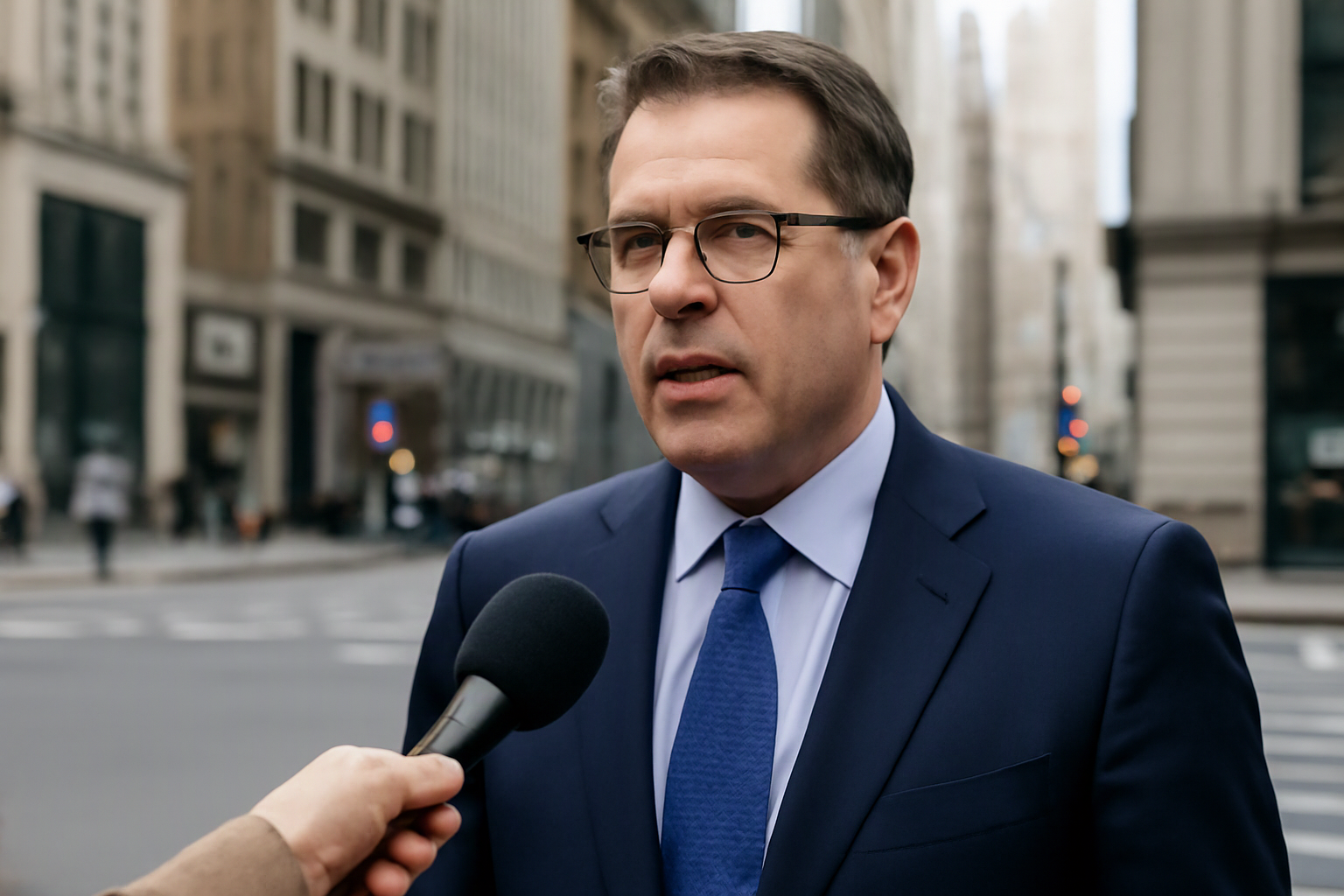
Mark Cabana, co-head of global rates strategy at BofA Securities, stood before a backdrop of bustling Wall Street, where the pulse of the financial markets beats louder than ever. He recently shared insights that challenge the prevailing sentiment among investors who believe the Federal Reserve's interest rate hikes are nearing an end. With a steady tone, Cabana conveyed that it may be too early to declare the conclusion of this monetary tightening cycle.
In a recent interview on Bloomberg Surveillance, Cabana articulated his belief that the Fed might need to implement more than three additional hikes. This assessment runs counter to the market's current pricing, which suggests that the Fed's aggressive rate increases are tapering off. Cabana's insights come at a crucial time when the financial landscape is still adjusting to the implications of previous rate hikes.
Cabana emphasized that the economic indicators do not support a premature conclusion to the Fed's tightening cycle. He noted that inflation remains a persistent concern, and the Fed's dual mandate of maximizing employment while stabilizing prices is still at play. As such, the central bank may need to consider further adjustments to interest rates to combat inflation effectively.
The backdrop of this discussion is a U.S. economy that is showing signs of resilience but is not without challenges. Recent data indicates that consumer spending remains robust, yet inflationary pressures continue to linger. Cabana pointed out that the Fed's decisions are often based on comprehensive data analysis, and the current economic metrics suggest that the fight against inflation is far from over.
Moreover, Cabana highlighted the importance of the labor market in shaping the Fed's decisions. With unemployment rates at historic lows, the Fed is likely to maintain a cautious approach to ensure that employment levels remain stable. This balancing act between fostering growth and controlling inflation is a delicate one, and Cabana's perspective sheds light on the complexities involved.
Investor sentiment appears to be shifting, as many market participants are eager for signs of a pivot in the Fed's policy. However, Cabana warns that this eagerness may lead to mispricing in the markets. He noted that the anticipation of rate cuts could be premature, and investors should brace themselves for further tightening measures from the Fed.
As the financial community digests Cabana's analysis, it becomes clear that there is a divergence between market expectations and economic realities. The potential for additional rate hikes could create volatility in the markets, impacting sectors sensitive to interest rate fluctuations. Investors are advised to remain vigilant and consider the implications of a prolonged tightening cycle.
The implications of the Fed's decisions extend beyond Wall Street and into the lives of everyday Americans. Families and businesses alike feel the pressure of rising interest rates, particularly when it comes to mortgages, loans, and credit. A prolonged tightening cycle could mean higher borrowing costs, which may strain household budgets and impact consumer spending.
For many New Yorkers, the stakes are high. The city's economy thrives on consumer spending, and any downturn could reverberate through local businesses. As the Fed navigates its course, community leaders are closely monitoring the situation, recognizing the potential ripple effects on employment and economic stability.
Local businesses, particularly those in the retail and service sectors, are already feeling the pinch of higher interest rates. Small business owner Maria Gonzalez, who runs a cafe in Brooklyn, shared her concerns: "Every time the Fed raises rates, it feels like we have to raise our prices, which pushes our loyal customers away. We need to keep our prices competitive, but we also need to cover our costs. It's a tough balancing act." Gonzalez's experience reflects a broader sentiment among entrepreneurs who are navigating an increasingly challenging economic landscape.
Additionally, the real estate market in New York City is particularly sensitive to interest rate fluctuations. Higher rates can lead to higher mortgage costs, which may deter potential homebuyers and slow down the housing market. Real estate agent James Lee noted, "We've seen a slowdown in buyer interest as rates increase. Many first-time buyers are being priced out, and that can have long-term effects on the market and the community." The implications for housing affordability are significant, particularly in a city where housing costs are already a major concern.
To further illustrate the local impact, we spoke with several residents who shared their thoughts on the potential for continued rate hikes. Sarah Kim, a recent college graduate, expressed her worries about entering the job market amidst rising costs: "I just graduated and am looking for a job. With rent prices and interest rates going up, I’m really concerned about my ability to afford a place on my own. It feels like everything is getting more expensive, and I haven’t even started my career yet."
Moreover, community organizations are stepping in to provide support. The NYC Small Business Services has launched initiatives aimed at helping local businesses adapt to the changing economic conditions. Programs include financial counseling and workshops to help entrepreneurs manage their cash flow and navigate the complexities of borrowing in a higher-rate environment.
Looking ahead, Cabana's insights prompt a critical question: what will the Fed's next move be? As the central bank continues to assess economic conditions, investors and consumers alike will be watching closely for signals that indicate the direction of interest rates. The upcoming Federal Open Market Committee (FOMC) meetings will be pivotal in determining how the Fed responds to evolving economic data.
Cabana's perspective serves as a reminder that the financial landscape is ever-changing, and adaptability is key. For families and businesses, understanding the potential implications of the Fed's decisions is essential for making informed financial choices. As the economy continues to evolve, the importance of strong financial planning becomes paramount.
In the community, financial literacy programs are gaining traction as residents seek to better understand the implications of interest rate changes. Local organizations are stepping up to provide workshops and resources aimed at helping individuals and families navigate their financial futures. For instance, the NYC Department of Consumer Affairs recently launched a series of free seminars designed to educate residents about budgeting, saving, and the impact of interest rates on loans and mortgages.
In conclusion, while the market may be leaning toward an end to the Fed's hiking cycle, Mark Cabana's insights suggest a more cautious approach is warranted. As New Yorkers navigate the complexities of the current economic environment, the need for sound financial strategies and a commitment to stability will be crucial in weathering the potential challenges ahead. The community's ability to adapt and respond to these changes will determine how well it can sustain its economic vitality in the face of uncertainty.
By Katherine Langford

By Marcus Chen

By Katherine Langford

By Katherine Langford